Evan Handler on "Neccessary Roughness"
By Jamie Ruby
 Necessary Roughness follows the life of Dr. Dani Santino (Callie Thorne), a psychotherapist as well as single mother, who is hired to be the psychologist for the football team the New York Hawks. The series revolves around her and her patients as they struggle both on and off the field.
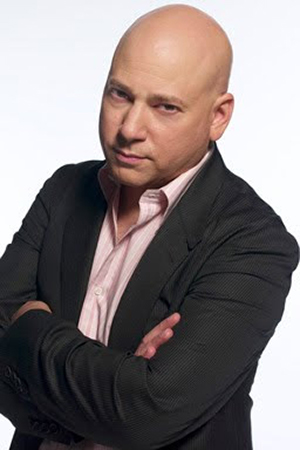
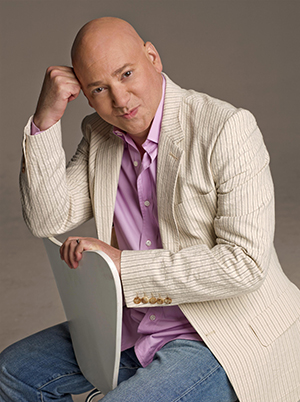
This season introduces the owner of the Hawks, Marshall Pittman, played by Evan Handler, who fans may know as Charlie Runkle on Californication, or previously for his role as Harry Goldenblatt on Sex and the City.
Handler recently talked to the media about his role on the show.
USA Network Conference Call
Necessary Roughness
Evan Handler
June 18, 2012
 SCIFI VISION: Hi. Thanks for talking to us today.
EVAN HANDLER: Oh, my pleasure, Jamie. The rules seem so strict I’m afraid if somebody breaks them trap doors are going to open underneath you and you fall to the floor and disappear.
SCIFI VISION: Yeah, maybe. We’ll be okay, I think. So, can you talk about how you started on Necessary Roughness, how that all came about?
EVAN HANDLER: That’s a good question. I don’t know how it all came about. My agents presented me with the offer, and along the way I heard from the executive producers that there was a great deal of discussion that I guess the powers that be and the corporate backer USA Network were extremely particular about who would play this particular role. And for reasons that were discussed outside my presence, there was excitement about my name in particular.
QUESTION: In Season 1 there was a lot of talk about Marshall Pittman, and his somewhat sinister presence was a very prominent trait of the show, despite him never making an actual appearance. So, how was it for you as an actor to get in the shoes of the character that had such a big build up in the first season, and what were the defining factors in how you decided to play the character in the end? Did you just use your own grasp of what the character was, based on the Season 2 script, or did you watch the first season to have an idea of what was expected of it?
EVAN HANDLER: Yeah. That’s daunting, when a character is built up with so much in advance. And it also plays right into some of the traps and risks of working on the television show in particular, because not only did I come in and this character has been built up and built up and built up, but as on any television show you’re shooting one episode and subsequent episodes have not necessarily yet been written.
So, whatever the writers have done and said about you in a particular episode might not even really match with what they then decide to do one or two episodes later. So, as with anything, I take my cues from the written words. So, I watched Season 1, I learned what they had set up about this guy, we had some talks about what they thought they were going to do with the character, but even one or two episodes in that took some dramatic turns.
So, the best you can do is work with each script and make your choices, and if they’re contradicted later then, well, you hope the audience interprets that as a complexity.
QUESTION: With everything that’s going on with Marshall Pittman and the team, can you talk about how he changes from when he was first introduced?
EVAN HANDLER: Well, as I said just a minute ago, he’s certainly spoken about a lot in the first season, but I suppose with vague sinisterness. And then, when he appears I think the safety coating for me and everyone is that he’s supposed to be very mercurial and unpredictable so it leaves a certain freedom, even if you set up something that if there’s inconsistency later on. And because two of the episodes have yet to air, I think what comes into play is that behind the bravado is what’s revealed as possibly a surprising sensitivity and vulnerability.
I think that’s the best answer I can give to that.
QUESTION: I want to know what elements of Marshall have you found that you’re taking on as your own?
EVAN HANDLER: Well, I don’t know. That presumes a lot, that question. I don’t know that I’ve taken on any aspect of Marshall. I didn’t live with him all that long. It was interesting going to Atlanta and doing it. You know, some of the references that were made to him originally ranged from Howard Hughes to Richard Branson to Ted Turner. We were in Atlanta and I passed the CNN headquarters often getting to and from the set, so I do think Ted Turner became an iconic reference in my mind; a mercurial, whimsical commander of empire.
QUESTION: What of yours have you given to Marshall to balance that out?
EVAN HANDLER: What do I think of myself? My main challenge in going down to Atlanta and doing this was my great discomfort in performing with my clothes on and with no sexual activity to rely on. So whenever I was photographed from the belt up, let’s say, I actually would play the scenes without pants on just so I could maintain my own level of comfort after years on Sex and the City and Californication.
QUESTION: Pittman is clearly the villain of this season so far, and it seems frankly everybody hates him already. Is there anything good about him, and do you think we’re going to see a change in him as this season goes on?
EVAN HANDLER: Well, those are strong words. I don’t know what everybody thinks of him. I like to think that it’s clear that there’s some possible method behind the madness, and I do think there’s a change. As I said, I think there is a vulnerability that’s revealed along the way. And certainly for Necessary Roughness to continue as its fan know and love it, I don’t think Marshall Pittman can absolutely destroy the team. I don’t want to give too much away, but I think - what do I say? I think there is a modulation to his behavior at some point, or at least some better understanding of his frantic contradictions will come into play.
QUESTION: What do you think is the thing that you like best about playing this role on this show?
EVAN HANDLER: Well, it’s a gamble whenever you travel someplace to drop into a society that you’re not familiar with. Really, the best thing was that, as on Californication, the actual culture of Necessary Roughness is an incredibly familial and friendly one. You can drop into a TV show and find that everybody is angry at each other and bitter and hates the way that the show is run and doesn’t like the way they’re being treated, and this was the opposite of that.
This was a group of very happy people and a group of executive producers and a network that seemed to be taking great care of each other. So, I suppose that sounds all namby-pamby, but it was a great relief to me and it was just a nice four weeks in Atlanta.
SCIFI VISION: Is there anything you learned about yourself after doing Necessary Roughness?
EVAN HANDLER Huh, that’s interesting. I think I went into it a little bit daunted about playing this very powerful and famous and media savvy mogul-type figure. Maybe that comes from, you know we’re deep into the sixth season now of Californication where I play Charlie Runkle, a character that when I described him to my five-year old daughter she said, “Oh, he’s a lot like Charlie Brown,” because I said, “Well, always makes mistakes and gets in trouble.”
So, I think you can come to wonder whether the world is willing to perceive you as someone slick and in control and powerful. I’ve been pleased with the glimpses that I’ve seen so far that I’m not horrified by portrayal yet.
QUESTION: Since you mentioned the fact that we will see vulnerability in Marshall, I know that there is quite an emotional big scene coming up for him. Without giving too much away, can you tell us how we get to that moment and whether and how Nico and Marshall come to terms with this tension there is between them that’s been caused by Gabrielle?
EVAN HANDLER: Yeah, actually I think the emotional climax of the Marshall story comes in his confrontation with Gabrielle...Obviously, Marshall and Nico also have their issues to resolve, but I think the most volatile emotional one comes during the divorce proceedings with Gabrielle. And Nico and Marshall part on, I would say, peaceful terms - although I don’t think everything is tied up neatly. Marshall goes away. I don’t know if they have any plans to resurrect him at any point, but it’s not like he takes a bullet and is buried or anything like that.
...
QUESTION: In playing a successful guy like Marshall, are there any similarities to playing an agent, in terms of certain types of personalities? Was that easier for you?
EVAN HANDLER: Well, the agent I play on Californication is a very particular, although I think a rather realistic one. It was interesting coming on the heels of Jeremy Piven’s great success in Entourage. But, the agents that I’ve dealt with, anyway in my life, have been much more like Charlie Runkle, meaning that they were more schlumpy and more bumblers, and guys who I think lived vicariously through their clients, as opposed to the slick, high flying life that they’re often portrayed as having.
So no, I didn’t feel a lot of similarity between Charlie Runkle, the particular guy that I’ve lived with for some years on Californication, and Marshall Pittman. To me, they actually seemed like pretty different creatures inhabiting different realms of existence.
 QUESTION: What vision do you want to bring from your own imagination of playing Marshall to the screen?
EVAN HANDLER: I’m trying to think back to any particular - I tend when I work, and certainly on Californication it’s become very comfortable, to make contributions and make suggestions. I’m trying to remember anything that might have been the case.
I think when we first started doing some wardrobe tests the clothing was extremely conservative and corporate, and I came home late from being out carousing in Atlanta one time and Rob Morrow, who was directing that episode, I was wearing these, I don’t know, white jeans and a sport shirt and a very modern blue Italian jacket and he said, “Oh, there it is, right there.”
And I had actually made a bid to have Marshall be - I saw no reason that he had to be a conventional corporate type. I thought it’d be interesting if he actually looked like kind of a hipster, and was extremely mod in his dress. And it didn’t become that, but it settled somewhere in between. But I really thought, “Why not make this guy very other than what people would think of a conventional corporate titan.”
SCIFI VISION: How do you choose your roles?
EVAN HANDLER: My choices are limited by those presented to me, generally. And among those, the main criteria is do I feel that this is quality material working with people whose work I respect? And then, is it something that appeals to my sense of drama or comedy, something that I feel like I can wrap my fingers around and do something fun and interesting with? I guess there are different times when I feel like I’ll choose something, and that’s because I feel like it is unfamiliar and challenging to me, versus something where I just feel like I know exactly how to do this.
So, just that group of criteria, what I feel like doing at the moment, and whether it’s something I feel like is going to be something I can feel proud of, certainly avoiding things that I feel like I’ll feel humiliated by.
Necessary Roughness follows the life of Dr. Dani Santino (Callie Thorne), a psychotherapist as well as single mother, who is hired to be the psychologist for the football team the New York Hawks. The series revolves around her and her patients as they struggle both on and off the field.This season introduces the owner of the Hawks, Marshall Pittman, played by Evan Handler, who fans may know as Charlie Runkle on Californication, or previously for his role as Harry Goldenblatt on Sex and the City.
Handler recently talked to the media about his role on the show.
USA Network Conference Call
Necessary Roughness
Evan Handler
June 18, 2012
SCIFI VISION: Hi. Thanks for talking to us today. EVAN HANDLER: Oh, my pleasure, Jamie. The rules seem so strict I’m afraid if somebody breaks them trap doors are going to open underneath you and you fall to the floor and disappear.
SCIFI VISION: Yeah, maybe. We’ll be okay, I think. So, can you talk about how you started on Necessary Roughness, how that all came about?
EVAN HANDLER: That’s a good question. I don’t know how it all came about. My agents presented me with the offer, and along the way I heard from the executive producers that there was a great deal of discussion that I guess the powers that be and the corporate backer USA Network were extremely particular about who would play this particular role. And for reasons that were discussed outside my presence, there was excitement about my name in particular.
QUESTION: In Season 1 there was a lot of talk about Marshall Pittman, and his somewhat sinister presence was a very prominent trait of the show, despite him never making an actual appearance. So, how was it for you as an actor to get in the shoes of the character that had such a big build up in the first season, and what were the defining factors in how you decided to play the character in the end? Did you just use your own grasp of what the character was, based on the Season 2 script, or did you watch the first season to have an idea of what was expected of it?
EVAN HANDLER: Yeah. That’s daunting, when a character is built up with so much in advance. And it also plays right into some of the traps and risks of working on the television show in particular, because not only did I come in and this character has been built up and built up and built up, but as on any television show you’re shooting one episode and subsequent episodes have not necessarily yet been written.
So, whatever the writers have done and said about you in a particular episode might not even really match with what they then decide to do one or two episodes later. So, as with anything, I take my cues from the written words. So, I watched Season 1, I learned what they had set up about this guy, we had some talks about what they thought they were going to do with the character, but even one or two episodes in that took some dramatic turns.
So, the best you can do is work with each script and make your choices, and if they’re contradicted later then, well, you hope the audience interprets that as a complexity.
QUESTION: With everything that’s going on with Marshall Pittman and the team, can you talk about how he changes from when he was first introduced?
EVAN HANDLER: Well, as I said just a minute ago, he’s certainly spoken about a lot in the first season, but I suppose with vague sinisterness. And then, when he appears I think the safety coating for me and everyone is that he’s supposed to be very mercurial and unpredictable so it leaves a certain freedom, even if you set up something that if there’s inconsistency later on. And because two of the episodes have yet to air, I think what comes into play is that behind the bravado is what’s revealed as possibly a surprising sensitivity and vulnerability.
I think that’s the best answer I can give to that.
QUESTION: I want to know what elements of Marshall have you found that you’re taking on as your own?
EVAN HANDLER: Well, I don’t know. That presumes a lot, that question. I don’t know that I’ve taken on any aspect of Marshall. I didn’t live with him all that long. It was interesting going to Atlanta and doing it. You know, some of the references that were made to him originally ranged from Howard Hughes to Richard Branson to Ted Turner. We were in Atlanta and I passed the CNN headquarters often getting to and from the set, so I do think Ted Turner became an iconic reference in my mind; a mercurial, whimsical commander of empire.
QUESTION: What of yours have you given to Marshall to balance that out?
EVAN HANDLER: What do I think of myself? My main challenge in going down to Atlanta and doing this was my great discomfort in performing with my clothes on and with no sexual activity to rely on. So whenever I was photographed from the belt up, let’s say, I actually would play the scenes without pants on just so I could maintain my own level of comfort after years on Sex and the City and Californication.
QUESTION: Pittman is clearly the villain of this season so far, and it seems frankly everybody hates him already. Is there anything good about him, and do you think we’re going to see a change in him as this season goes on?
EVAN HANDLER: Well, those are strong words. I don’t know what everybody thinks of him. I like to think that it’s clear that there’s some possible method behind the madness, and I do think there’s a change. As I said, I think there is a vulnerability that’s revealed along the way. And certainly for Necessary Roughness to continue as its fan know and love it, I don’t think Marshall Pittman can absolutely destroy the team. I don’t want to give too much away, but I think - what do I say? I think there is a modulation to his behavior at some point, or at least some better understanding of his frantic contradictions will come into play.
QUESTION: What do you think is the thing that you like best about playing this role on this show?
EVAN HANDLER: Well, it’s a gamble whenever you travel someplace to drop into a society that you’re not familiar with. Really, the best thing was that, as on Californication, the actual culture of Necessary Roughness is an incredibly familial and friendly one. You can drop into a TV show and find that everybody is angry at each other and bitter and hates the way that the show is run and doesn’t like the way they’re being treated, and this was the opposite of that.
This was a group of very happy people and a group of executive producers and a network that seemed to be taking great care of each other. So, I suppose that sounds all namby-pamby, but it was a great relief to me and it was just a nice four weeks in Atlanta.
SCIFI VISION: Is there anything you learned about yourself after doing Necessary Roughness?
EVAN HANDLER Huh, that’s interesting. I think I went into it a little bit daunted about playing this very powerful and famous and media savvy mogul-type figure. Maybe that comes from, you know we’re deep into the sixth season now of Californication where I play Charlie Runkle, a character that when I described him to my five-year old daughter she said, “Oh, he’s a lot like Charlie Brown,” because I said, “Well, always makes mistakes and gets in trouble.”
So, I think you can come to wonder whether the world is willing to perceive you as someone slick and in control and powerful. I’ve been pleased with the glimpses that I’ve seen so far that I’m not horrified by portrayal yet.
QUESTION: Since you mentioned the fact that we will see vulnerability in Marshall, I know that there is quite an emotional big scene coming up for him. Without giving too much away, can you tell us how we get to that moment and whether and how Nico and Marshall come to terms with this tension there is between them that’s been caused by Gabrielle?
EVAN HANDLER: Yeah, actually I think the emotional climax of the Marshall story comes in his confrontation with Gabrielle...Obviously, Marshall and Nico also have their issues to resolve, but I think the most volatile emotional one comes during the divorce proceedings with Gabrielle. And Nico and Marshall part on, I would say, peaceful terms - although I don’t think everything is tied up neatly. Marshall goes away. I don’t know if they have any plans to resurrect him at any point, but it’s not like he takes a bullet and is buried or anything like that.
...
QUESTION: In playing a successful guy like Marshall, are there any similarities to playing an agent, in terms of certain types of personalities? Was that easier for you?
EVAN HANDLER: Well, the agent I play on Californication is a very particular, although I think a rather realistic one. It was interesting coming on the heels of Jeremy Piven’s great success in Entourage. But, the agents that I’ve dealt with, anyway in my life, have been much more like Charlie Runkle, meaning that they were more schlumpy and more bumblers, and guys who I think lived vicariously through their clients, as opposed to the slick, high flying life that they’re often portrayed as having.
So no, I didn’t feel a lot of similarity between Charlie Runkle, the particular guy that I’ve lived with for some years on Californication, and Marshall Pittman. To me, they actually seemed like pretty different creatures inhabiting different realms of existence.
QUESTION: What vision do you want to bring from your own imagination of playing Marshall to the screen? EVAN HANDLER: I’m trying to think back to any particular - I tend when I work, and certainly on Californication it’s become very comfortable, to make contributions and make suggestions. I’m trying to remember anything that might have been the case.
I think when we first started doing some wardrobe tests the clothing was extremely conservative and corporate, and I came home late from being out carousing in Atlanta one time and Rob Morrow, who was directing that episode, I was wearing these, I don’t know, white jeans and a sport shirt and a very modern blue Italian jacket and he said, “Oh, there it is, right there.”
And I had actually made a bid to have Marshall be - I saw no reason that he had to be a conventional corporate type. I thought it’d be interesting if he actually looked like kind of a hipster, and was extremely mod in his dress. And it didn’t become that, but it settled somewhere in between. But I really thought, “Why not make this guy very other than what people would think of a conventional corporate titan.”
SCIFI VISION: How do you choose your roles?
EVAN HANDLER: My choices are limited by those presented to me, generally. And among those, the main criteria is do I feel that this is quality material working with people whose work I respect? And then, is it something that appeals to my sense of drama or comedy, something that I feel like I can wrap my fingers around and do something fun and interesting with? I guess there are different times when I feel like I’ll choose something, and that’s because I feel like it is unfamiliar and challenging to me, versus something where I just feel like I know exactly how to do this.
So, just that group of criteria, what I feel like doing at the moment, and whether it’s something I feel like is going to be something I can feel proud of, certainly avoiding things that I feel like I’ll feel humiliated by.

Latest Articles
Interviews
 Outlander: Blood of My Blood Showrunner Matthew B. Roberts on Introducing Gerard Grey, Book Lore Connections & Telling Women's Stories
 Friday, 16 October 2026
 Orion: Drew Van Acker & Debby Ryan on Layered Performances & Shifting Truths
 Monday, 12 October 2026
 Guillermo Navarro on Pan’s Labyrinth’s 20-Year Legacy, Oscar Win & the Craft of Cinematography
 Sunday, 11 October 2026
 Orion Director Jaco Bouwer on Building Tension and Creating an Otherworldly Atmosphere
 Friday, 09 October 2026
 Dark Matter: Amanda Brugel on Blair's Big Reveal, Her Trauma & What's Ahead in Season 2
 Wednesday, 07 October 2026
 Dark Matter Season 2: Blake Crouch on Expanding Beyond the Book, Diverging from the Main Story & More
 Monday, 28 September 2026
 Outlander: Blood of My Blood Season 2: Harriet Slater, Jamie Roy, Jeremy Irvine & Hermione Corfield on Love, War, & Separation
 Saturday, 26 September 2026
 Outlander: Blood of My Blood S2: Matthew B. Roberts & Maril Davis on Trauma, History & Storytelling
 Wednesday, 23 September 2026
 Dark Matter Season 2: Dayo Okeniyi on Leighton's Hubris & Oluko's Faith in the Box
 Tuesday, 22 September 2026
 Tommy & Tuppence: Josh Dylan and Antonia Thomas on Modernizing Agatha Christie
 Tuesday, 15 September 2026
Reviews


